No, I do not read this this way at all - Giving it away doesn’t mean you are immune to getting gifted it at a later point. Someone ends up with it when you ‘transfer’ it.
My expectation of two units with a devil weapon and “transfers away devil effect” fighting is that each of them simultaneously transfers the devil effect, thus both units would end up with it (unit B is suffering from unit A’s devil weapon and vice versa). My expectation, if there’s only one devil weapon involved, is that the unit who didn’t have the devil weapon doesn’t have a chance of whacking themself.
The problem of not knowing that “devil effect” has a specific meaning; (21 - Lv)% or (31 - Lck)% chance of damaging yourself instead of your opponent when you hit them - is a problem that is difficult to clarify; and directly feeds to why Alice among others have believed that it would be based on the user’s luck - since there’s an implicit oddity in ‘passes your devil reversal off’.
To me personally, I think that it’s immediately obvious that you would never be actually penalized for having more stats, because that’s just very Un-Fire Emblem. More stats is better and inverting that isn’t okay; and if the designer betrays that idea I would feel betrayed and lied to about the basic conceit of having numbers go up. Fire Emblem isn’t Final Fantasy Tactics where having more stat sometimes is a downside, the precedent set by every game to my knowledge is that it is never worse to have more numbers - ie. there are not “deals bonus damage equal to 50% enemy’s res”; so there’s no logical reason - from my perspective - that having a unit having gotten high luck would make their devil reversal passing away to be less impactful.
Just never say this. Please.
The words you used are insufficiently clarifying. It’s not as simple as you think it is; and please trust me when I say that I know how a thing seems and sounds and looks simple - the problem is that you are not the target audience - or more accurately, the persons reading you do not have your context.
a. Why would it work differently?
b. At some level, the player and designer must have some level of intrinsic trust and faith that they are going to work with the other. You simply can’t reasonably design things without this - look at Fire Emblem Heroes’ skill tooltips for an example of what it looks like when you don’t - literally full-phone screen sized skill descriptions that have shortening keywords in them:

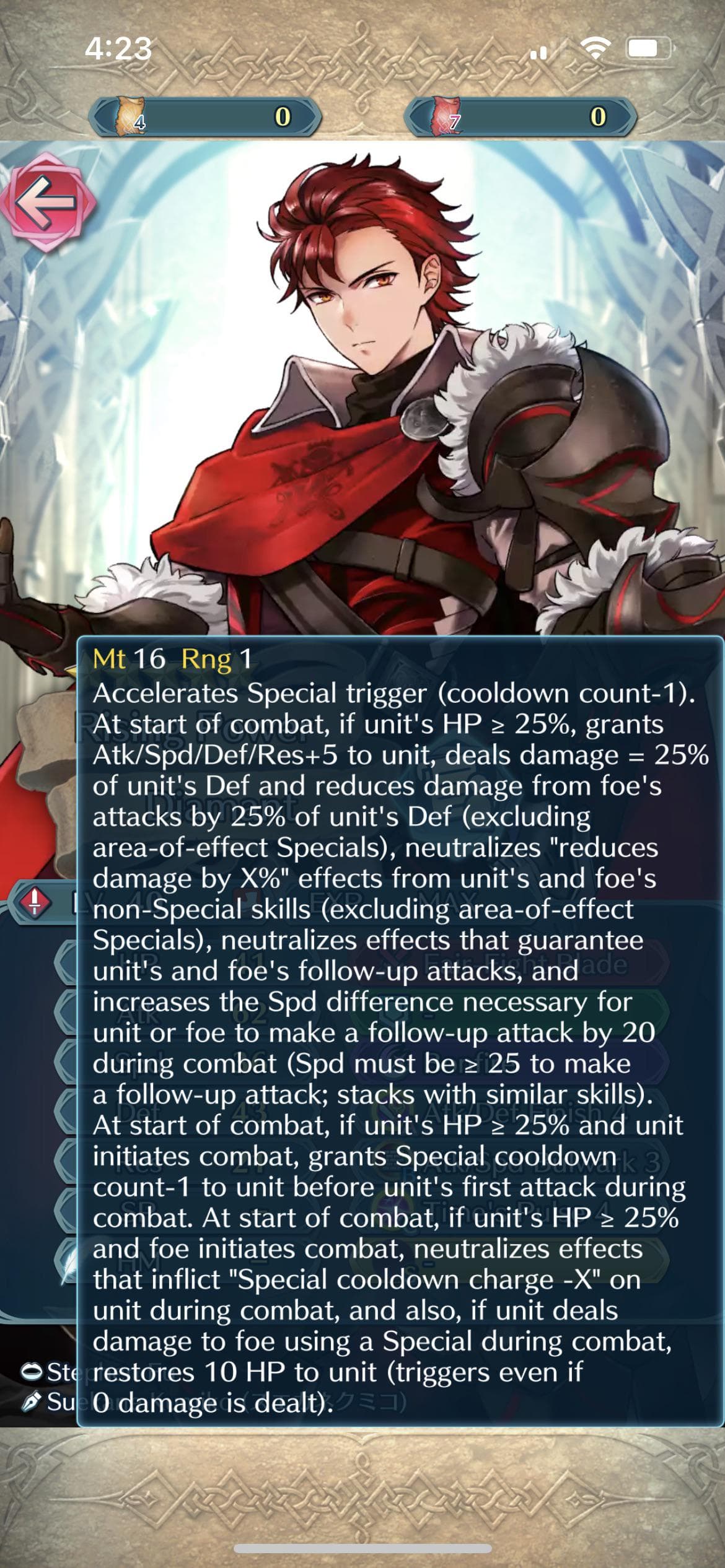
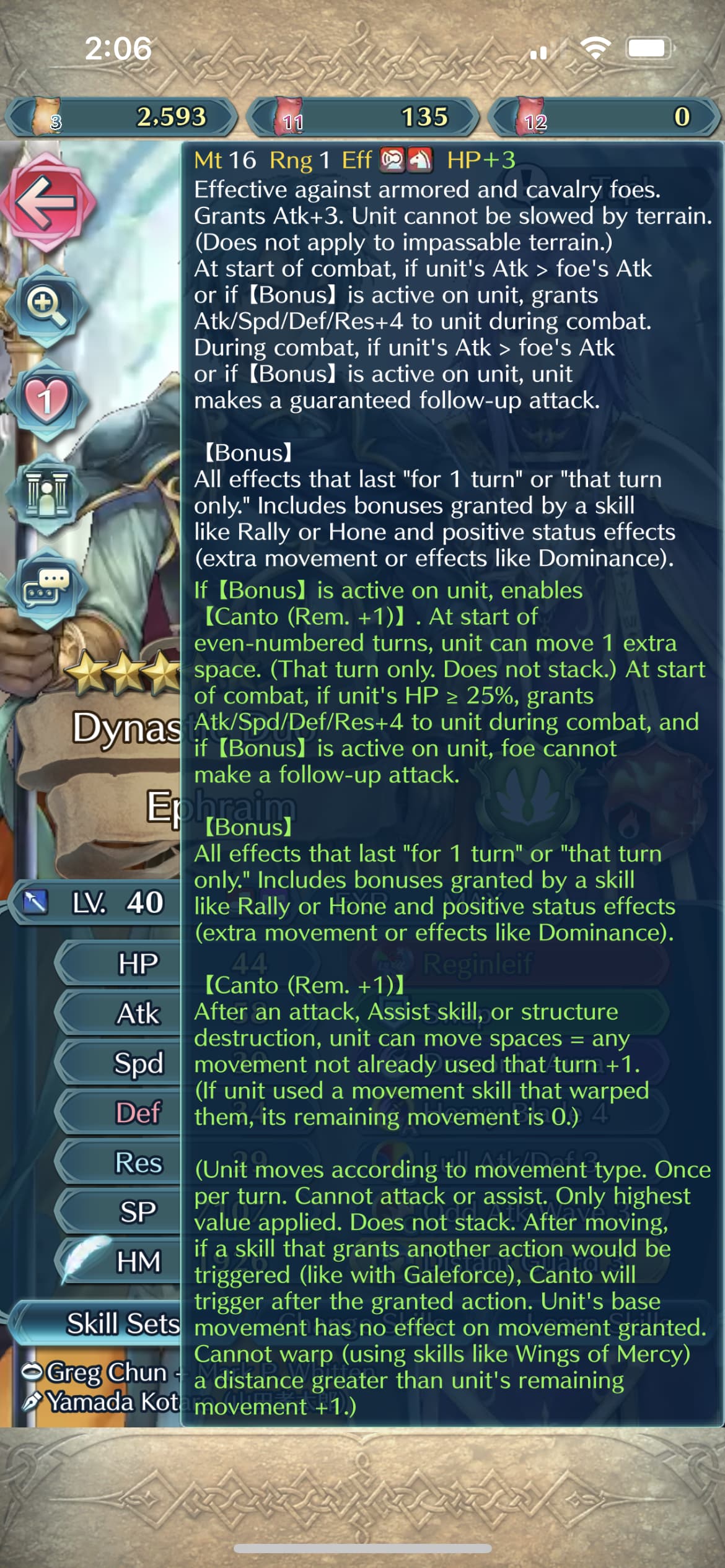
And I think we can all agree that these are awful, just about the worst to read, yeah?
This is true of literally everything. The only way to 100% conclusively prove something mechanically about a video game is to look at the code - otherwise, someone could have snuck in random elements that coincidentally never occurred in your test rounds.
I don’t think this is a good argument. It’s the easiest way to demonstrate the objective truth.