Shozhou (Dragon Herald)
So I beat Dragon Herald by Sigmaraven a few days ago, and highlighted a few standout unit designs in my Dragon Herald thread post, of which included Shozhou. I want to expand on what I wrote for him there – consider that blurb like, the sparknotes version of this. In addition to the gameplay-story integration elements of his design, I want to touch upon how well his gameplay elements itself balance with each other as well.
This will contain some spoilers for Dragon Herald. You have been warned.
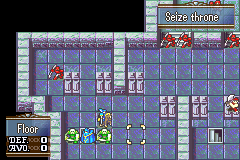
The party is introduced to Shozhou as the figure behind the forces trying to capture You in chapter 7. He reveals he was, in fact, the previous herald 20 years ago who’s said to have “gone rogue” and killed a bunch of people at the summit. He reveals that the Verians have a method of sleeper-agenting their heralds, and after his survival, he’s been looking at ways to overcome their dragon-based magic, represented as light magic in-game. He tells You what happened and tells her to rethink what she’s sent to do, only to have her sleeper agent magic brainwashing activate to refuse that. Seeing that Shozhou summoned a whole army of skeletons to fight the protags, believing that killing her will free her from what happened to him 20 years ago.
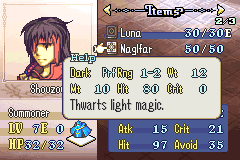
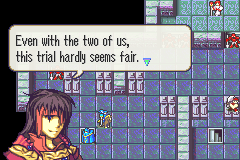
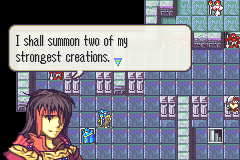
The party defeats his skeleton summon army (tangentally: this is the hardest chapter for me in the game), and he does manage to break the brainwashing on You by breaking one of his own rare artifacts, and sends her off to do her thing her way. He later comes in to assist You—while You is free of brainwashing, the actual villains had some extra tricks up their sleeve, and shit still goes down. In chapter 8, Shozhou joins as a high level summoner with Luna in his base inventory. He leaves for a few chapters, then comes back to help You out with the original Herald’s trial in chapter 11, this time joining the party for good. He has his Luna there, as well as the tome he has as a boss in chapter 7, Nagalfar, which is his personal reaver dark tome, framed in story as something capable of beating the draconic powers that he managed to discover. He also shows up with 2 additional summons–they’re of higher power than his standard summons, but operates independently. While you do have the option of controlling them directly at the cost of some extra rewards at the end, you are given a Nosferatu tome the chapter prior, and can update his equipment in preps to take Nos + Physic, so it wasn’t too hard for me to keep them green.
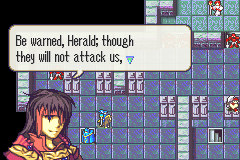
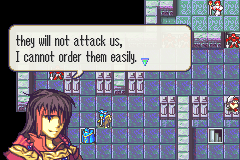
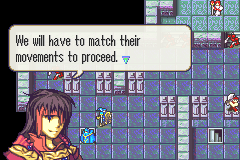
So that’s the background on Shozhou’s story presentation until he joins as a full-time player unit. Let’s break this down on how his kit ties into his back story and role.
As a prior Herald, Shozhou has been trained in Dragon temple styles of combat, which includes verian swordsmanship and light magic (You notably said she’s not good at magic innately so it’s only after her trial that she gains proper access to it with the First’s blessings). You’ll note that neither of them is what he uses currently–swords, granted, is less strictly tied to heraldhood, and more that shozhou just innately prefers using magic, but having no light despite many of the magic classes having 2 magic type access is a very intentional decision given he must know how to use it–to show his utter rejection of it. His staff rank is also higher than dark, and this too, is intentional–note that You is also a healer, and the healing aspects, Shozhou didn’t reject, as there is still kindness in his heart. He did, after all, save Mute, no matter what he says his motivations are, and in his solo ending, becomes a physician
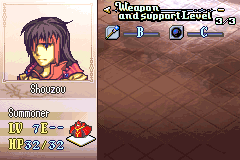
This is further backed up by his boss quote during chapter 11, which you will very likely see given Nagalfar is helpful against the boss.
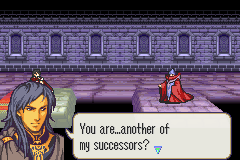
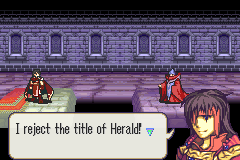
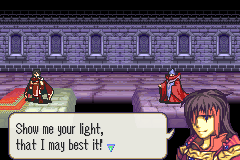
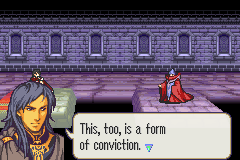
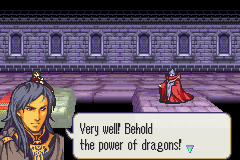
Shozhou’s character motivations is primarily wanting revenge on the country that turned him into a puppet to commit atrocities, so beyond Nagalfar, his personal, being a reaver tome to be good against light, his other starting weapon, Luna (which he even referenced in dialogue), is an anti-mage tome in general. Veria has a high concentration of magic users, so this further exemplifies his vengeance drive through his equipment. As the only summoner in the game and given his control over a summon army (with prep time), and with his battle quote in c11 in mind, it’s pretty heavily implied that he came up with this kind of summoning magic. One thing I also didn’t notice myself but I brought up the rest of this to sigmaraven, he told me

Blew my mind how much detail went into Shozhou’s unit design.
Anyway so how does this work out in gameplay? I enjoy units with role compression, and summoners as a whole, so Shozhou clicked with me instantly. He has competent combat, good staff rank, and of course, his summons. That in itself is instant deploy for me forever, but I do want to note his summons do change some of the way he changes how summoners are often used for me.
So his summons are quite solid, as in physically formed, and thus don’t cross terrain like default GBA summons. While this is technically a nerf to summon utility, summon utility itself is already quite strong, and this creates some interesting dynamics in using all of Shozhou’s kit. Because Shozhou’s summons don’t cross terrain, I want them to be up when I actually need them, whether it’s the right position to distract an enemy that would otherwise combine for a kill on a squishier unit or distracting siege. Shozhou’s own stats come into play here well–he has high, competent stats, but not immortal, and he does have a pretty high base level so there’s a limit to his snowballability, but he can equip nosferatu. Nos has enough weight on it to keep him from doubling a good chunk of enemies, so he’s not going to nos solo, but it does let him hit a reasonable bulk level to frontline into better position his summons, or even just to be an off-tank himself for a turn if needed. Normally, when I use summons, because they can get places easily, I tend to be spammier with them, and often neglect the rest of a summoner’s kit. With Shozhou, since his summons have higher positioning requirements, I have downtime for when I want his summons to actually be up, and he can contribute with combat and staffing in relatively more even proportions.
Terrain-interacting summons are not fully a strict summon power-down however, as they will benefit from terrain bonuses. In chapter 16, where the party has to take down two bosses, one of which is a very high power 3 range-having sniper boss on a cliff, who’s also surrounded by a bunch of homies and also a ballista guy. However, by leaving a summon in range of the ballista on top of a mountain to benefit from the hefty avo bonuses, Shozhou can practically indefinitely distract the ballista with it while also using the rest of his kit to help the advance. I was able to safely get the rest of my team to be able to jump all the mage and archer generic enemies to cover my wyvern safely into ganking the boss without having to go fully around.
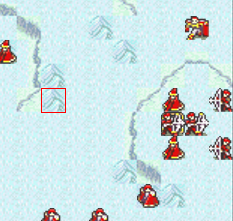
highlighting the tile in builder because it’ll show with the reinforcements up and because i forgot to take a real screenshot while I was playing. Most of the bottom sages do move, so they’ve already cleared out, but I did still have to gank most of the guys on the cliff in 1 go to ensure operational safety, and freeing up summon to do other things on subsequent turns of locking down ballista guy was very important to my strat here.
And to be specific: This isn’t saying terrain-limited summons are better in a design sense than terrain-ignoring summons, I also have some very fun and cool strats developed out from terrain-ignoring summons that would be unreplicable here, it’s just the differences–both limitations and perks here– creates interesting and different lines of play.
So in short, Shozhou’s unit design package is a masterclass in ludonarrative harmony and the summon change greatly impacts how often I use parts of his kit as a whole in a fun and interactive way.
He’s also like one of my favorite characters in the story too, so that’s a plus. Play Dragon Herald.